 Are you looking for a new career?



Our Integrated Model of Support
Mercury College is part of the Hesley Group and delivers education through The H.E.S.L.E.Y. Integrated Model.
An organisation-wide framework, this model brings together specialist education, Positive Behaviour Support, consultant-led clinical leadership and multidisciplinary therapeutic input to help young people feel safe, access learning and make meaningful progress.
This means that:
- Education is shaped by communication, sensory, emotional wellbeing and learning needs
- Positive Behaviour Support informs daily practice and helps create predictable, capable environments
- Outcomes are aligned to EHCPs, Preparation for Adulthood and quality of life
- Communication, participation and independence are developed across the curriculum and daily life
Mercury College does not operate a separate or alternative model. It applies the H.E.S.L.E.Y. Integrated Model within an education setting, ensuring consistency and clarity.
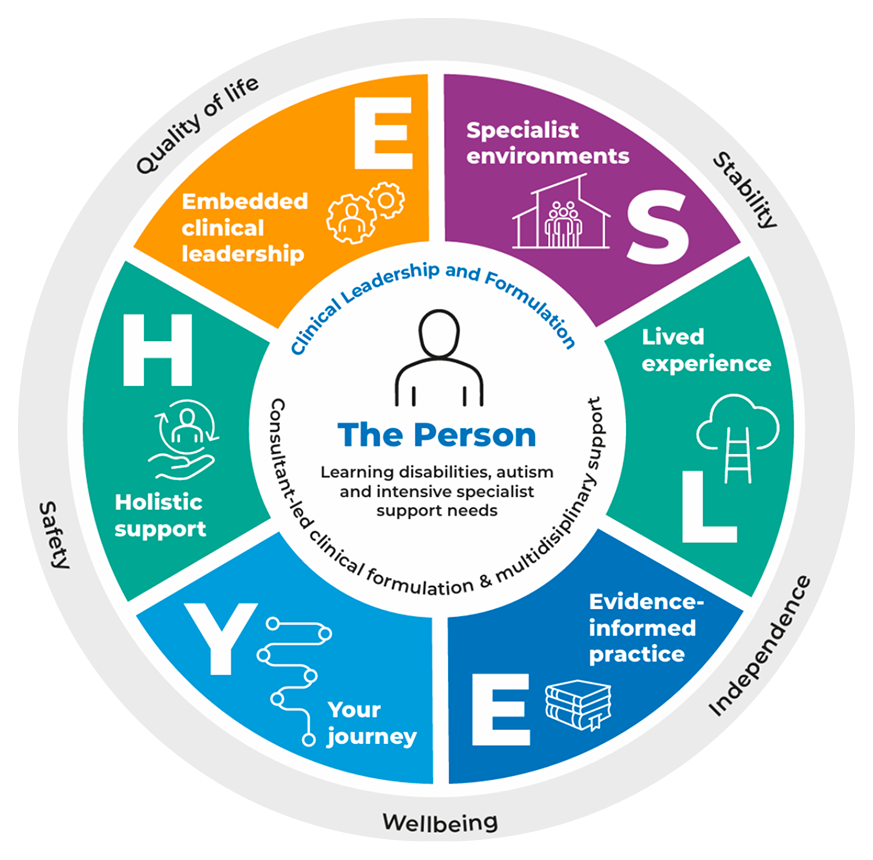
What is the H.E.S.L.E.Y. Integrated Model?
The H.E.S.L.E.Y. Model explains, clearly and transparently, how Hesley Group supports people with learning disabilities and intensive specialist support needs. It brings together specialist education, specialist care and consultant-led clinical leadership into one shared approach, focused on quality of life, wellbeing and meaningful outcomes. This model underpins all Hesley Group services and provides a consistent framework for families, commissioners and professionals.
At the heart of the H.E.S.L.E.Y. Integrated Model is the person. Support is built around the individuals needs, preferences, communication and wellbeing. Planning and review focus on dignity, choice and what matters most to the person and their quality of life.
What H.E.S.L.E.Y. stands for:

Holistic support
Education, care and clinical teams work together to one shared plan. Support is consistent across learning environments and living spaces, reducing fragmentation and uncertainty.

Embedded clinical leadership
Consultant-led, in-house clinical leadership provides oversight, formulation and decision-making support across services. Intensive specialist support needs are understood, held and supported through consultant-led clinical leadership.

Specialist environments
Environments are carefully designed and adapted to meet intensive specialist support needs. Sensory considerations, predictability and safety are central to reducing distress and supporting engagement.

Lived experience
Quality of life, dignity and wellbeing guide all support. Planning goes beyond risk management to focus on stability, relationships, independence and participation.

Evidence-informed practice
Support is guided by Positive Behaviour Support, clinical formulation and recognised quality-of-life measures, including the San Martin Scale. Practice is reviewed and adapted as needs change.

Your journey
Outcomes are personal and meaningful. Progress is reviewed over time with the individual, families and professionals to support sustained positive change.
What the H.E.S.L.E.Y. Model achieves
- Increased emotional wellbeing and reduced distress
- Greater independence, choice and autonomy
- More stable placements and routines
- Improved communication and understanding
- Increased engagement in learning, activities and relationships